Learning Game Development (2005–2008)
My interest in creative work originally started with designing and making video games.
In January 2005, as a 13-year-old teenager in Saue, I discovered Game Maker, a game development tool created by Dutch programmer Mark Overmars, and became fascinated by the idea that ordinary people could not just play, but actually create computer games themselves.
A selection of projects I completed during my teenage years (2005–2008).
I had already spent the previous year experimenting with whatever copy of Photoshop a 13-year-old could get his hands on, taking design requests on Internet forums and editing photos for friends. But Game Maker opened up an entirely new set of possibilities.
Learning Through Small Projects
At the time, the main meeting place for young Estonian hobby game developers was the DMGamez (Mängumeistrid) forum. This is where people shared projects (rarely finished, but often full of ambition), exchanged ideas and occasionally helped each other solve technical problems.
What stands out is how little support existed compared to today. There was no AI to ask for help, even YouTube was only just being created and nobody around me had any programming background. If something did not work, you searched forums, read tutorials and kept trying until you eventually figured it out.
The first games I completed were small hobby projects made at home after school. One thing that helped me enormously were the game development competitions regularly organised on the DMGamez forum. Suddenly there was a deadline. If you wanted to participate, your game had to be playable and uploaded by a certain date. Afterwards, judges would play the entries and publish detailed reviews.
Looking back, all three of my completed teenage games were made for these competitions. Without them, at least some of the projects would probably have remained unfinished experiments sitting on my hard drive.
The funny part is that all three ended up winning their respective competitions. So for a brief period as a teenager, I could technically claim to be an award-winning game developer with a 100% success rate.
Let’s go back to 2005.
Kohtumine surmaga (2005)
In August 2005, my younger cousin Kert and I created Kohtumine surmaga, a Wild West–inspired top-down RPG for the Mängumeistrid forum's team competition (Kambavõistlus).
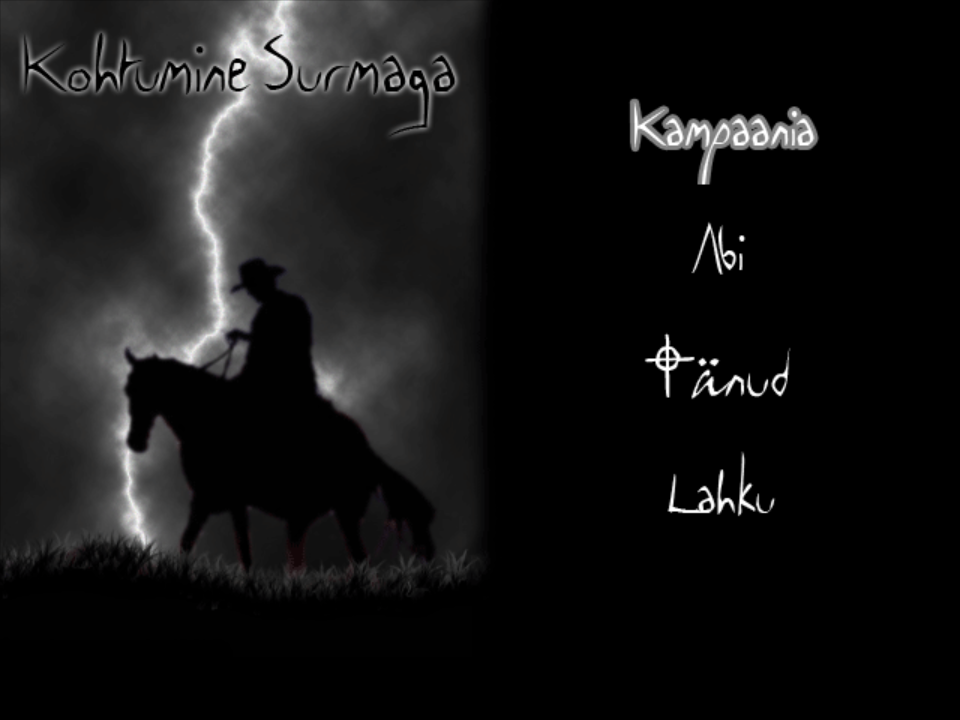
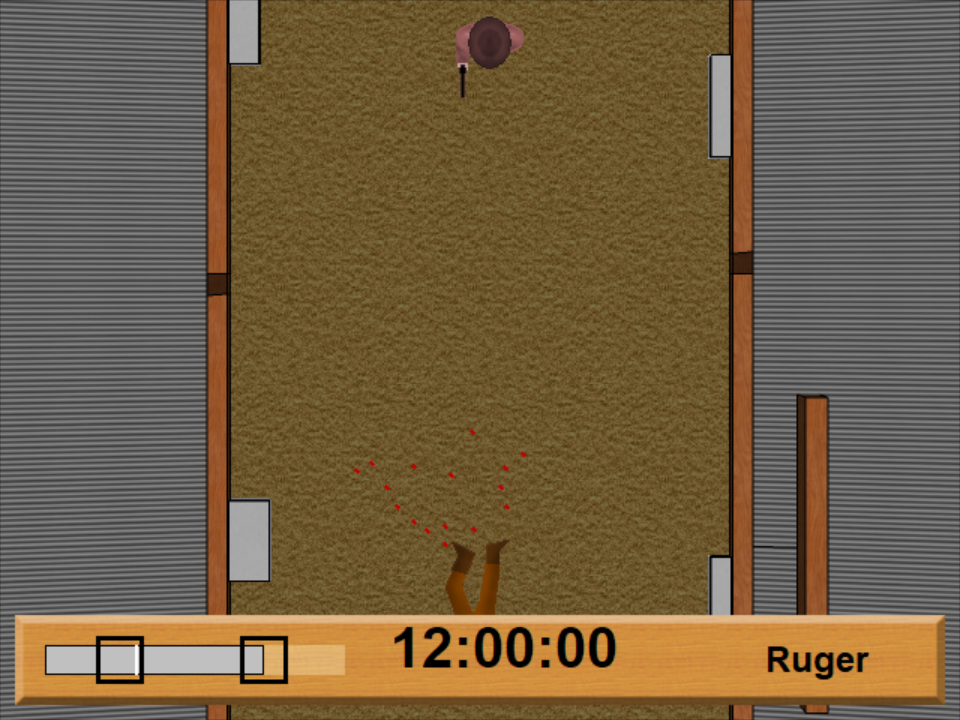
Built in roughly a week during the summer holidays, the simple gameplay revolved around duels, revolvers and earning money to buy better weapons. Exactly the sort of thing that seemed incredibly cool to a 14-year-old boy after watching an old Western on TV late at night.
A bit about the graphics. The level background started as a simple SketchUp model. Since I was not particularly confident drawing larger scenes from scratch, it felt much easier to build the street and surrounding buildings in 3D first and then capture a screenshot from the perspective I wanted.
The menu screen also reflected where my Photoshop skills were at the time: a custom grass brush, rendered clouds, lightning effects and a silhouette cut from a photograph. How to separate the text from the background? Yes, an Outer Glow effect.
Parts of the game were built at Kert’s house, while other parts were completed at mine, and project files occasionally travelled between the two locations on a floppy disk. In true early-2000s fashion, the disk usually contained not just the game files but also some Game Maker 5.3 serial keys.
The game later won first place in the competition, giving us a cool forum signature banner and one of our first experiences of sharing something we had created with a wider community.
One lesson from this project: it is much harder to abandon a project when someone else is building it with you and holding you accountable.
Rauatagujad (2005)
Later the same year, now going solo, I created Rauatagujad, a medieval blacksmithing simulation inspired by my fascination with knights, castles and the everyday work happening behind the scenes of larger historical events.
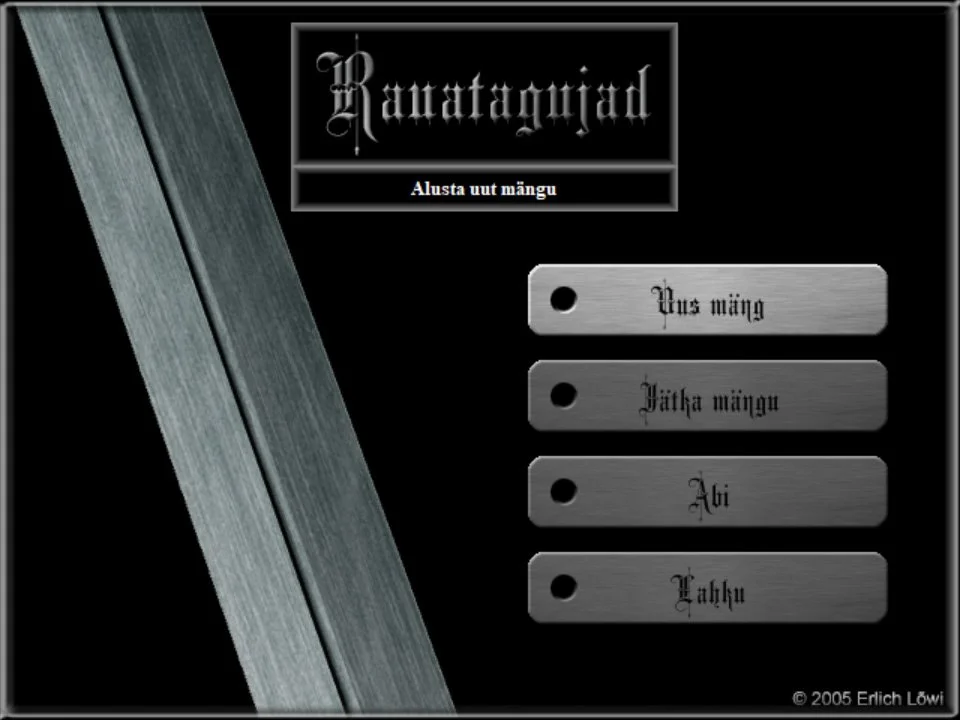
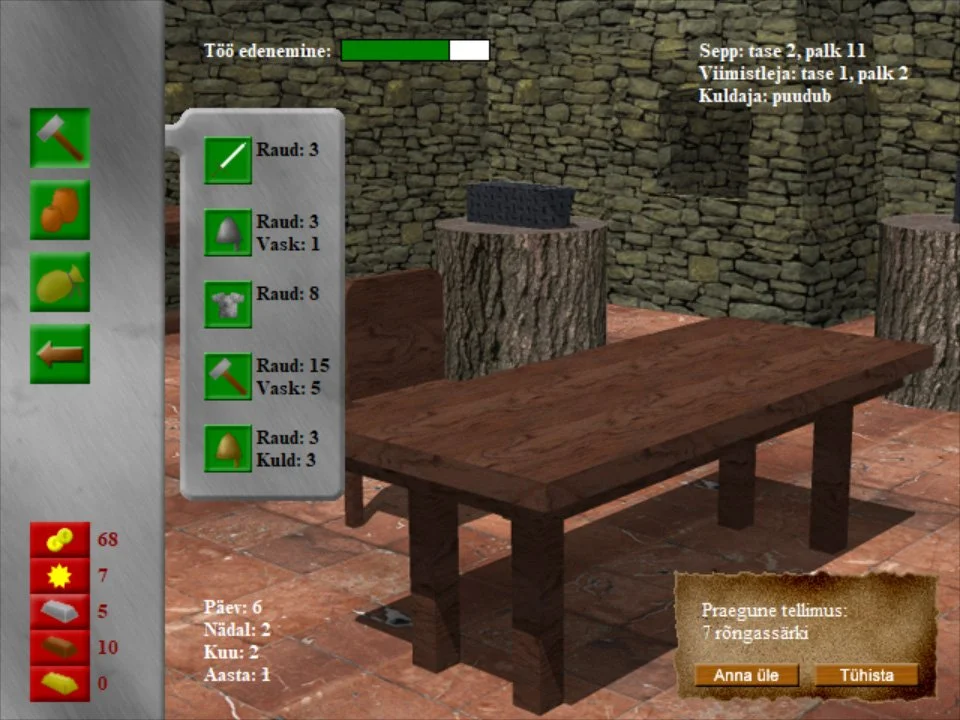
The game took roughly a month to complete from the first ideas to the final release, with two weeks of actual development – progress became slower since school had started again.
Like in my previous game, I once again used SketchUp to create the main environment. I modelled a blacksmith's workshop and used a screenshot of it as the gameplay background. The workshop itself was not explorable, but served as the setting where all of the game's activities took place.
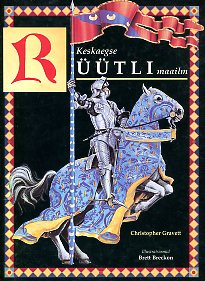
The book from my childhood that got my interested in armored gear for knights.
The finished game later won a medieval game development competition organised by the Mängumeistrid community. Another cool banner to add to my forum signature!
What surprised me most was how positively everyone reacted to the game's unusual premise. Several judges described the idea as original, while others praised the graphics and atmosphere.
One judge also took the opportunity to explain why Times New Roman (that I used in the game’s UI) was "the most annoying font in existence" – feedback that has apparently stayed with me for nearly twenty years.
Wabatahtlised (2008)
After several game making projects and experiments in 2006–2007 that never quite reached the finish line, a strategy game competition on the DMGamez forum finally gave me the motivation to complete one.
The result was Wabatahtlised (2008), a turn-based strategy game based on the Estonian War of Independence – and, to my knowledge, the first video game ever made about the subject.
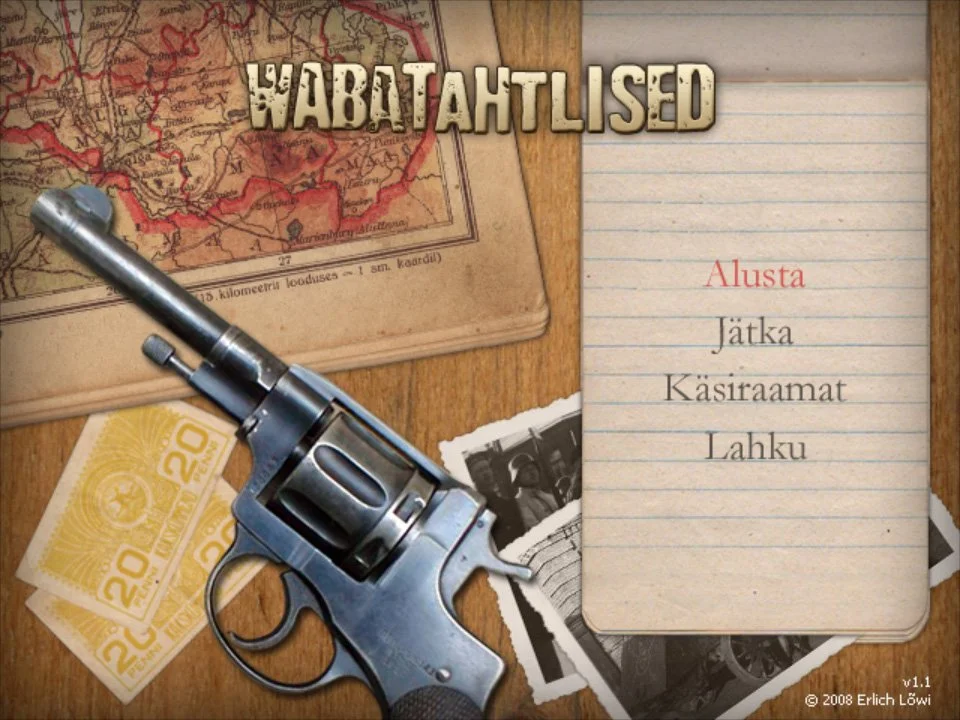
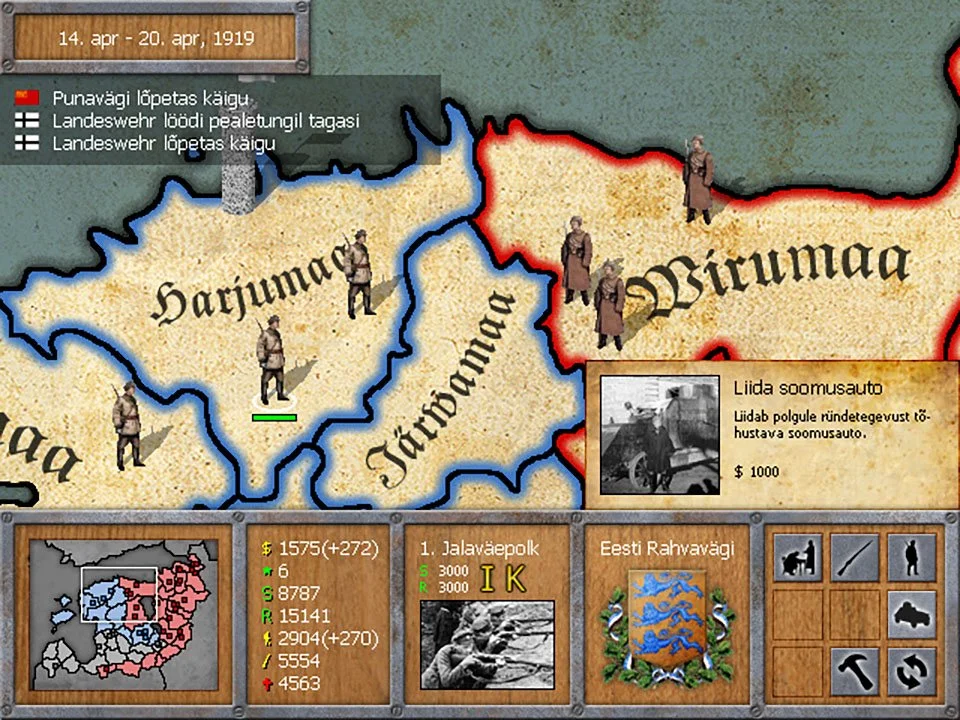
It was by far the most ambitious project I had attempted.
To make it move forward, I also kept a handwritten development journal, recording my progress every day from mid-April to late July 2008. It was my way of holding myself accountable: “What have you done for the project today?”
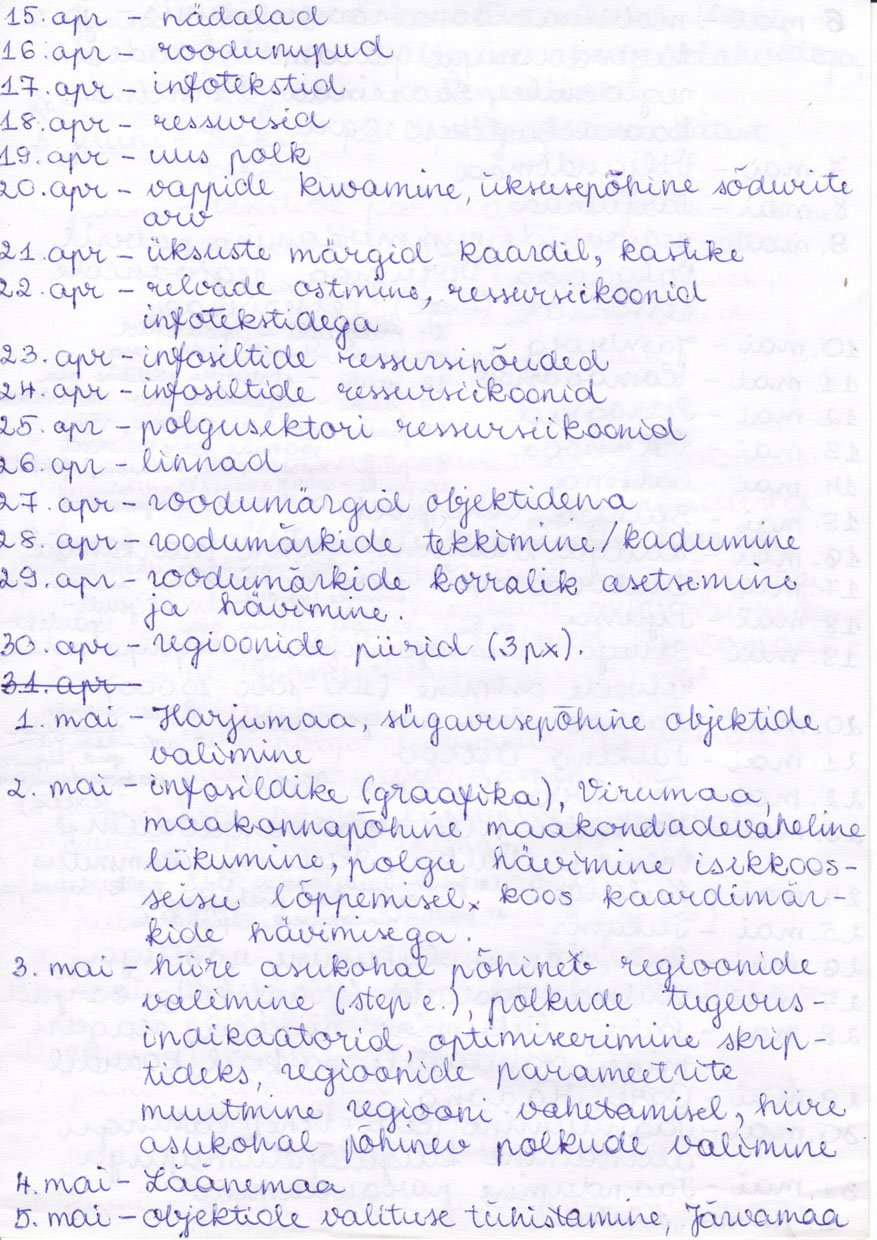
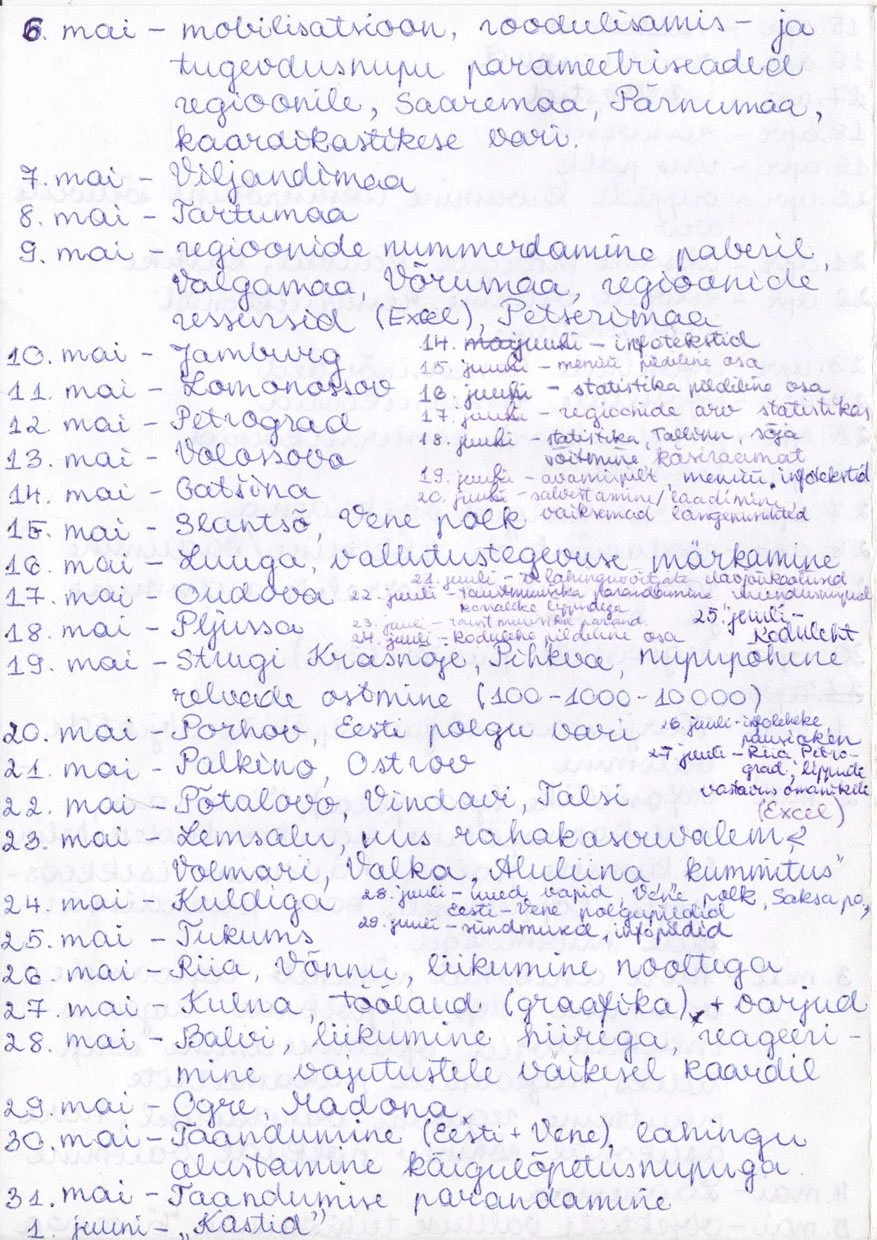
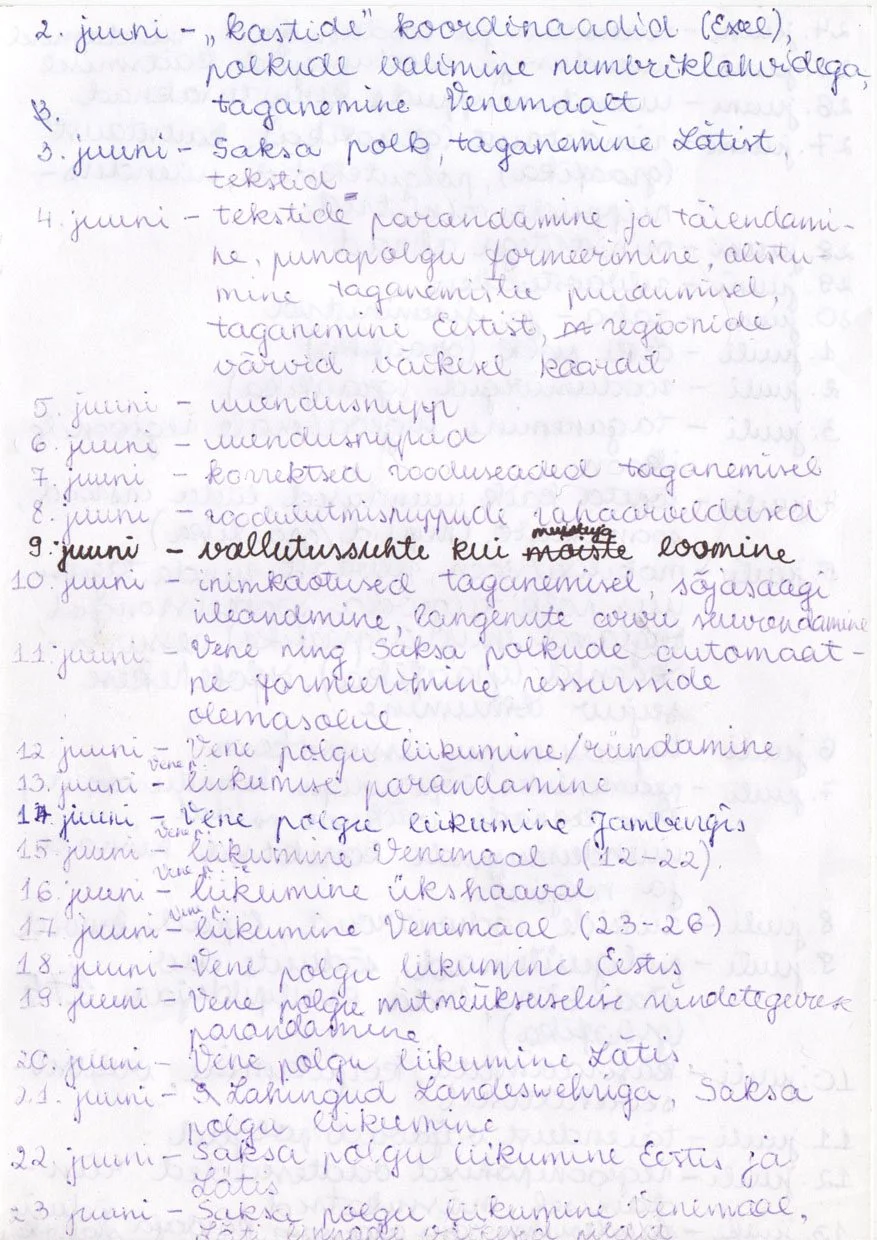
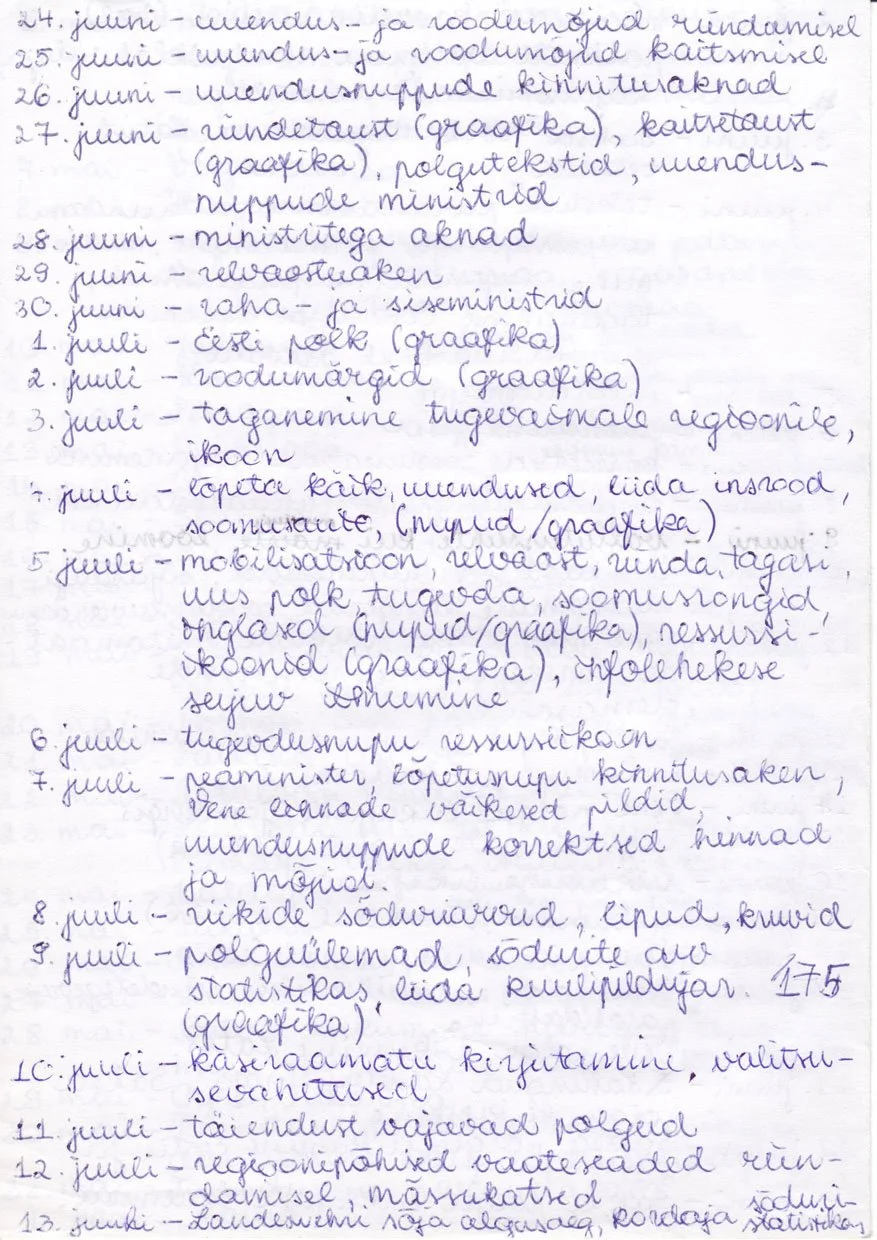
Keeping it handwritten and in plain sight on my desk also made it a physical reminder – unlike a text file you could simply choose not to open. Some days I did more and some less, but I didn’t skip a single day for over three months.
Eventually the hard work paid off and Wabatahtlised won the strategy game development competition.
What I remember most is not the result itself, but the feeling that people were genuinely engaging with something I had created.
They discussed strategy, game balance, historical authenticity, graphics, music and user interface decisions as if it were a real commercial game rather than a hobby project made by a teenager during summer break.

The film that first sparked my interest in the Estonian War of Independence.
The project probably deserves an article of its own on this blog. After all, it occupied most of one summer and somehow keeps reappearing in unexpected places even today.
What Came Out of It
What makes these projects special to me today is their authenticity. I was not trying to build a portfolio, grow an audience or impress anyone. My design skills were still limited, I wanted to keep going and had to improvise to find quick workarounds to things that would otherwise require years of training.
The method was that I simply became fascinated by an idea and followed it wherever it led. Did what I could and accepted what I couldn’t.
This is still how I operate best. I enjoy making plans and organising lists, but most of the things I’m proudest of started with curiosity rather than a carefully planned strategy. The strategy usually develops along the way, as a way of turning that interest into something real.
Sometimes I simply follow my intuition and only later realise how strategic some decisions actually were.
Without really noticing it, these games also became my first lessons in self-management. Finishing a project meant setting deadlines, solving problems independently and finding ways to keep going when motivation inevitably faded.
I did not think of it that way at the time, but those skills ended up being useful in almost every creative project that followed.