Why I Have This Website: Breadcrumbs for the Future
Why have a personal website in 2026?
There are easier ways to show your work. A portfolio can live on Behance, photographs on Instagram, professional history on LinkedIn, and a CV can be sent as a PDF whenever someone asks for it. Building a website, going through years of old files and then writing at length about some of them is considerably more work.
And a personal website is, by definition, selective. I decide what goes here, which projects deserve another look and what I say about them.
But that isn't really why I started building this.
The Work Disappears
One reason is surprisingly practical: creative work disappears. Think of the Buddhist monks who spend weeks creating intricate mandalas from coloured sand, only to sweep them away when they are finished.
The monks accept impermanence and I have hard drives and clouds full of old files. But much of the work I've done was created for a particular moment.
A campaign runs and ends. A poster comes down. An event is cancelled. A social media post gets buried under hundreds of newer ones. A website is redesigned. A video that took weeks to make gradually moves further down a YouTube channel, references become dated.
Then another project comes along, and another one after that. The client or the employer starts looking for something new, something fresh.
After enough years, even you start wondering what exactly you have been doing all this time.
Going through old folders for this website has repeatedly surprised me. I find things I had almost forgotten making. Some are better than I remembered. Others are interesting because I can now see what they led to, they become parts of a story.
Putting them here gives them a little more permanence.
“The Night in Lisbon”
I recall thinking about this disappearing problem before, although in a very different context.
Sometime in 2016, I read Erich Maria Remarque's The Night in Lisbon in a single night. At the time, I kept detailed reading notes on Blogger: page numbers, favourite passages and personal thoughts written down as they occurred to me while reading.
The next morning, I thought I had saved them.
Somehow, I hadn't.
The entire set of notes from the entire book was gone.
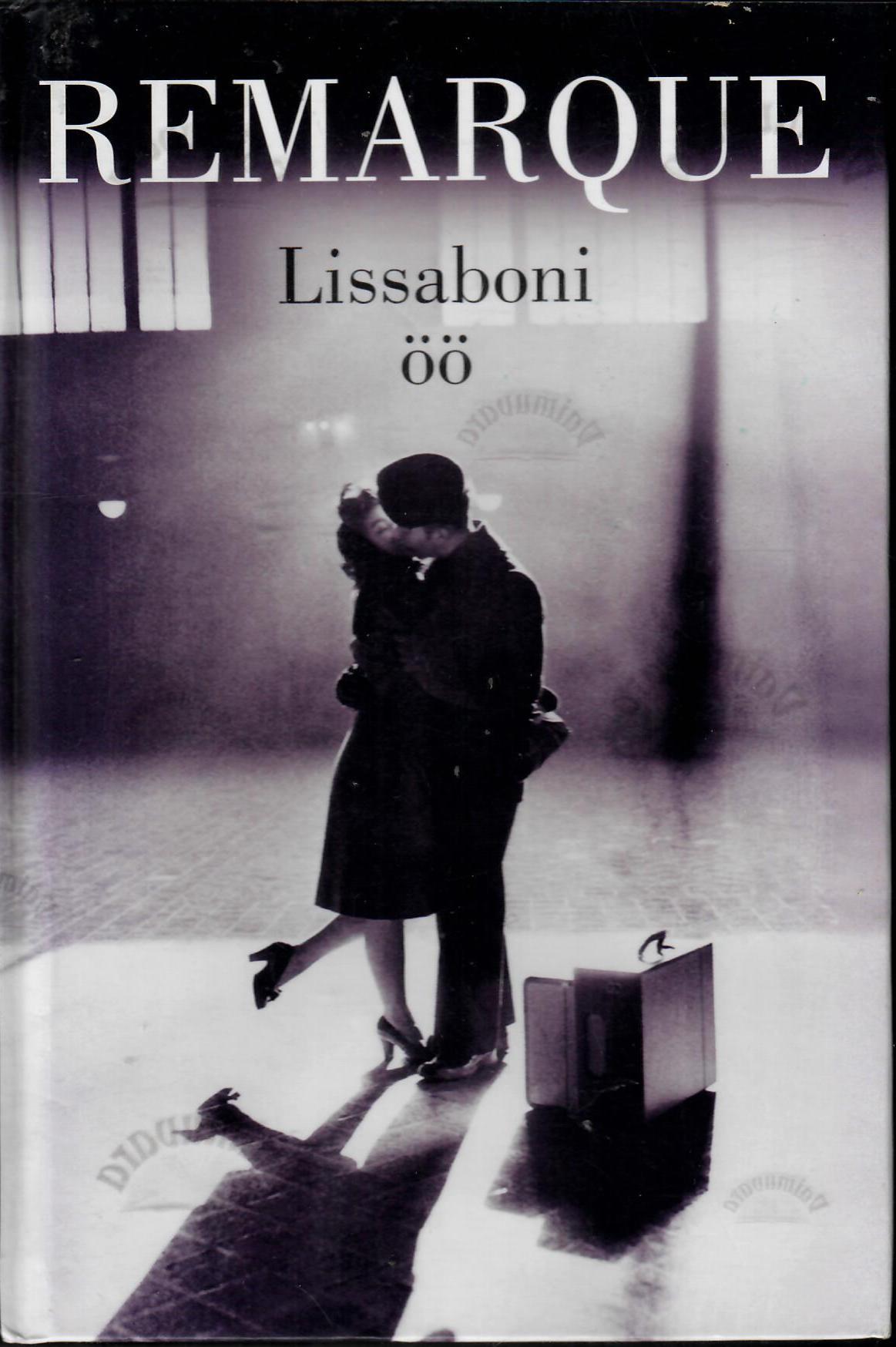
A book whose notes I somehow lost.
I was genuinely sad and angry with myself about losing them, but there was something almost absurdly appropriate about it.
The Night in Lisbon is a novel deeply concerned with memory and loss. I had understood its protagonist's telling of his story as an attempt to establish his memories somewhere outside himself – to leave a record that could survive the instability of memory. And then my own record of experiencing his story just… disappeared. Now that’s poetic.
Leaving Breadcrumbs Behind
I have a recurring dream where I take a great photo. Beautiful light, great composition, perfect exposure. I can't believe how lucky I got. Then, as I realise I'm waking up, I desperately start looking for some way to carry this photo into the waking world. A file transfer? With what? A QR code?
And then I wake up. "It exists now only in my memory," as in the Titanic meme.
A society that has forgotten its past.
Remembering isn't really preservation anyway. It is more like waking from the dream and immediately trying to write it down. Even while you're writing, something is already being lost. The words you choose begin replacing the thing you are trying to describe.
Details disappear; others become more important than they originally were. The more coherent you make the story, the less it resembles the disorder in which you actually experienced it.
But at least something remains.
So when I go back through old files and write about them now, I'm inevitably looking at them through everything that has happened since. But that’s fine. I'm just trying to leave enough of it behind that I can find my way back to it.
Putting My Work Where My Words Are
Actually, with visual arts, we have it relatively easy. My father spent decades playing the viola at the Estonian National Opera. He once said something that stayed with me: "Where is this mountain of music I've played? What do I have to show for it?"
A big reason why I started teaching in 2023 was to give new life to the things I had done by passing on what I had learned. I also wanted to be inspired by a new generation of young creatives and recognise something of myself in them. Maybe they could also see that I had faced many of the same worries and anxieties they were facing now.
And, perhaps, I wanted to find out whether my own skills still measured up to what the new generation was doing.
So there is another reason for this website that has become more important since I started teaching: at some point I have to put my work where my words are.
Students have asked to see my work. And for much of the time I have been teaching, my personal website has actually been offline.
I have gradually started showing more of my own projects in class. But pulling up a random file and saying "here's something I made" can feel strangely forced.
“This Is My Design”
During an Erasmus visit in 2024, teachers from abroad observed one of my design classes at Polytechnic School. One of them asked where they could see my work as a designer. By coincidence, I had a flyer I had designed for Tallinn Folk High School right there, as I was using it as an example with my students.
So I could simply hold it up and say: here's one.
As a designer, what can you actually show when someone asks to see your work?
But it made me wonder why the answer had to depend on whatever happened to be lying on my desk that day. Nothing wrong with that, but is it really what defines someone?
I can almost hear another saying from my father that fits here: "Why mourn last year's snow?" He used to make fun of men who boasted about how strong they had been in their youth but couldn't lift weights now because of some injury. "Your level is what you can do and show right now," he would say. Annoyingly, a fair point.
However, was there actually one place where someone could see what I had done – not just the finished images, but enough context for even my future self to understand why I made them and what my role was?
Why Not Just a Portfolio?
If the only purpose were to show my work, I could probably make something much simpler: twelve carefully selected projects, a short biography, a CV and a contact button.
You know, this website may even have those things, but I don't want that to be all it is.
I want a place where an old video game from 2008 can sit next to a branding project from 2026 and both can make sense as parts of the same story.
The Strange Economics of Maintaining a Portfolio
There is also an irony I've noticed from running a creative business. You have the most time to carefully curate your portfolio when you don't have enough work.
Once a steady flow of projects arrives, maintaining the portfolio quickly falls down the priority list. The work itself comes first. Then another project arrives. Years can pass surprisingly quickly that way. I am writing this in August 2026, and the latest post on the Walgus blog is still from Christmas 2023.
I remember this becoming almost absurd in 2021. There were so many completed projects in Walgus – including work that clients had specifically approved for marketing publication – that at the beginning of a new work week I would sometimes spend time simply moving the unpublished posts to new weekdays on our Trello calendar. Then another week would pass and I would move them again.
A perfectly normal-looking Walgus work calendar, January 2021.
At one point I even asked our design intern Madli to help with this, distributing projects across our monthly marketing calendar. We just never found the time to publish them. Projects sat there, ready to go, slowly withering away in the calendar.
The problem wasn't a lack of work worth showing. It was the opposite. Doing the work, managing the projects and consistently documenting and publishing everything we were doing simply wasn't realistic. We would have needed another person just for that.
I’ve since written more about those early years of Walgus, from 2018 to 2021, in a separate post here.
Looking Back, Seeing More
Walgus has its own collection of projects online, but a company portfolio answers a different question. It shows what the company has done for marketing purposes. Here I can ask what I learned from something, what I would do differently now, or why a seemingly minor project mattered to what came later.
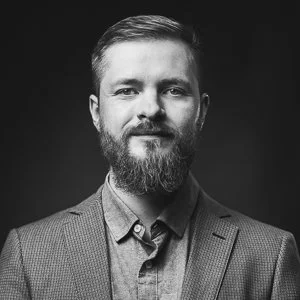
A photographer is often known by their photos, not their face. A designer is no different. Self-portrait from 2018.
Things that felt unrelated at the time start forming patterns. I can see why one interest led to another, which skills kept returning and how roles I thought were separate gradually became part of the same way of working. I find myself getting into a flow state while doing this.
Design, photography, video, marketing, teaching and project management can look scattered when reduced to job titles. Looking retrospectively may reveal that they're much more connected.
Nobody else is going to make those connections for me.
Why English?
There is one other question I've asked myself (or imagined others asking): why am I writing all of this in English?
My first personal brand from 2016. Later, it expanded to "Photography & Design". Now it has simply become "Visuals".
Part of the answer goes back to the beginning. When I set up the original version of my Erlich Lõwi Photography website in 2016, I chose erlichlowi.com rather than an Estonian .ee domain because I wanted it to have an international scope, something that crosses the language barrier.
As well as Photography, not fotograafia. There was Estonian content on the site too, but mostly short descriptions rather than articles like these.
Having a matching Facebook page called "Name Surname Photography" was almost standard in the Estonian photography community back then. You could practically create one on the way home from buying your first camera.
Good enough to Publish
Switching languages can silence the inner critic. In Estonian, I can hear, smell and taste every awkward phrase. I write content in Estonian for work every day, but there I already know the voice, the audience and what needs to be said. Here, things are less defined. I would probably spend ages trying to make an article like this sound exactly right in Estonian.
And that would give me one more perfectly reasonable reason not to publish anything yet. Steven Pressfield calls this "The Resistance".
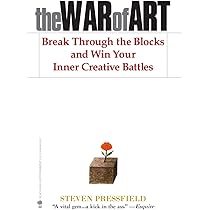
Where Pressfield introduces "The Resistance".
Oh and about Estonians writing in English, I know – I also cringe when local musicians explain that they write lyrics to their songs in English because Estonian doesn't rhyme or just doesn't sound right. I don’t agree and that's not what I'm claiming here either.
A Little Distance
The more important reason now is that English gives me a little distance from what I'm writing about. Distance is one of my core values. You can't really see a picture when you're only centimetres away from it. Photography lesson: every lens has a minimum focusing distance, it’s generally even printed on it. Take a step back and try again. Maybe try a different lens? Go too close and everything becomes a blur.
Oddly enough, writing in a language that isn't my first language sometimes makes it easier to write in my own voice.
It's a little like living abroad, or moving from a small town to a big city.
In a small community, you're less anonymous and surrounded by your own history and personal opinions. In a bigger environment, it becomes impossible to control how other people see you – and eventually you realise there is no reason to try – they don’t.
Most people are too busy with their own lives to know enough about yours to form the complete picture you imagine them forming. Or, in fewer words: nobody cares.
You stop wondering what your neighbour, an old acquaintance or your father might think, and get on with things.
To Sum Up (TL;DR)
The more I add to this website, the less I think of it as a portfolio.
It is certainly useful as one. My work is here if someone wants to see it, and my CV is here if someone wants the condensed version or even to remind myself where I come from. But putting the site together has turned out to be useful in other ways.
Looking backwards creates connections that weren't visible while I was busy moving from one project to the next, from one country to another. Things I had forgotten become important again. I can see where an idea came from, what one project taught me before the next one began, and how interests that once seemed unrelated gradually became part of the same body of work.
I can't preserve what it actually felt like to make something ten or fifteen years ago. Writing about it inevitably changes it, just as writing down a dream begins to replace the dream with words. But the alternative is to leave everything to memory – and memory is constantly making room for something new.
So this is what remains.
This post could probably use a few more images and another editing round to cut out some repetition. Like this entire website, in fact. But if I wait until all of that is done, I’ll probably publish it several months from now. So here it goes as it is.